
What is the EN 74-1 Test? Quality Tests for Scaffolding Accessories
Scaffolding systems used in the construction industry play a critical role in worker safety and structural stability. The scaffolding couplers, scaffolding connection elements, and other scaffolding accessories used in these systems are exposed to high loads and vibrations during operation.
For this reason, quality testing of scaffolding accessories is a crucial process to ensure safe use and performance reliability. One of the most widely recognized standards in Europe is the EN 74-1 standard, which defines the mechanical performance and testing requirements for scaffolding couplers.
The EN 74-1 test is mainly applied to connection elements such as scaffolding couplers, determining their load-bearing capacity and safe operating limits.
What is the EN 74-1 Standard?
The EN 74-1 standard is a European standard that defines the technical requirements and testing procedures for scaffolding connection elements used in steel tube scaffolding systems.
Under this standard, the following products are typically tested:
- Right Angle Coupler (Fixed Scaffolding Coupler)
- Swivel Coupler
- Putlog Coupler
- Pipe connection elements
Thanks to the EN 74-1 standard, the slip resistance, load-bearing capacity, and mechanical strength of scaffolding couplers are verified according to internationally recognized criteria.
These tests are essential to ensure the safe use and structural reliability of scaffolding accessories.
Tests Performed Under the EN 74-1 Standard
According to the EN 74-1 standard, scaffolding couplers and connection elements undergo several mechanical tests.
Slip Test
The slip test determines whether the scaffolding coupler slides on the tube when subjected to load.
During the test:
- The coupler is tightened to the tube with a specified torque
- Load is applied to the connection
- The slip resistance of the coupler is measured
This test verifies the load transfer performance of scaffolding connection elements.
Bending Strength Test
The bending strength test evaluates the resistance of the scaffolding coupler to deformation under load.
During this test, a certain force is applied to the connection and the following factors are examined:
- Deformation behavior of the component
- Maximum load capacity of the connection
This test is particularly important for determining the structural stability of scaffolding systems.
Ultimate Load Test
The ultimate load test determines the maximum load a scaffolding coupler can withstand before failure.
During the test:
- Increasing loads are applied to the connection
- The maximum load level and failure point are measured
This allows manufacturers to determine the safe working limits of scaffolding couplers.
Other Quality Tests Used for Scaffolding Accessories
While the EN 74-1 test is essential for scaffolding coupler standards, additional tests are also performed to verify the overall quality of scaffolding accessories.
Chemical Analysis
Chemical analysis determines the composition of the material used in the product.
The following elements are typically analyzed:
- Carbon (C)
- Manganese (Mn)
- Silicon (Si)
- Phosphorus (P)
- Sulfur (S)
Chemical analysis confirms whether the steel or cast materials used in scaffolding accessories comply with required standards.
Tensile Test
The tensile test is used to determine the mechanical properties of scaffolding connection elements.
This test measures three key values:
- Yield strength (Rp)
- Tensile strength (Rm)
- Elongation (A%)
These values indicate how scaffolding accessories behave under mechanical load.
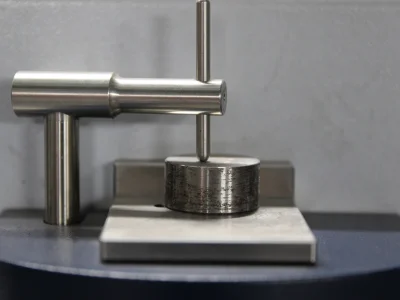
Hardness Test
The hardness test evaluates the surface resistance and wear resistance of the material.
This test helps assess:
- Mechanical strength of the material
- Quality of heat treatment
Dimensional Inspection
Dimensional inspection verifies whether product dimensions comply with technical drawings.
During this inspection, the following parameters are checked:
- Pipe diameter compatibility
- Component tolerances
- Thread dimensions
Accurate dimensions are critical for the safe installation and proper functioning of scaffolding couplers.
Why Are Scaffolding Coupler Tests Important?
Scaffolding couplers and scaffolding connection elements directly affect construction site safety. For this reason, scaffolding coupler quality testing provides several important advantages:
- Verification of product strength and durability
- Compliance with international standards
- Batch-based quality control
- Safer use on construction sites
Reliable manufacturers test their scaffolding accessories and couplers according to EN 74-1 standards and provide documented test reports.
Quality Control of Scaffolding Accessories at GCE Metal
At GCE Metal, we place great importance on quality control processes for scaffolding accessories and formwork connection elements.
Within this scope:
- Products are tested according to EN 74-1 standards
- Mechanical test results are documented
- Products are tracked with lot / heat traceability
- EN 10204 3.1 quality certificates are provided with shipments
Our goal is to provide customers not only with products but also with reliable quality verified through testing and documentation.
Hi :)
May i help you?
12:20