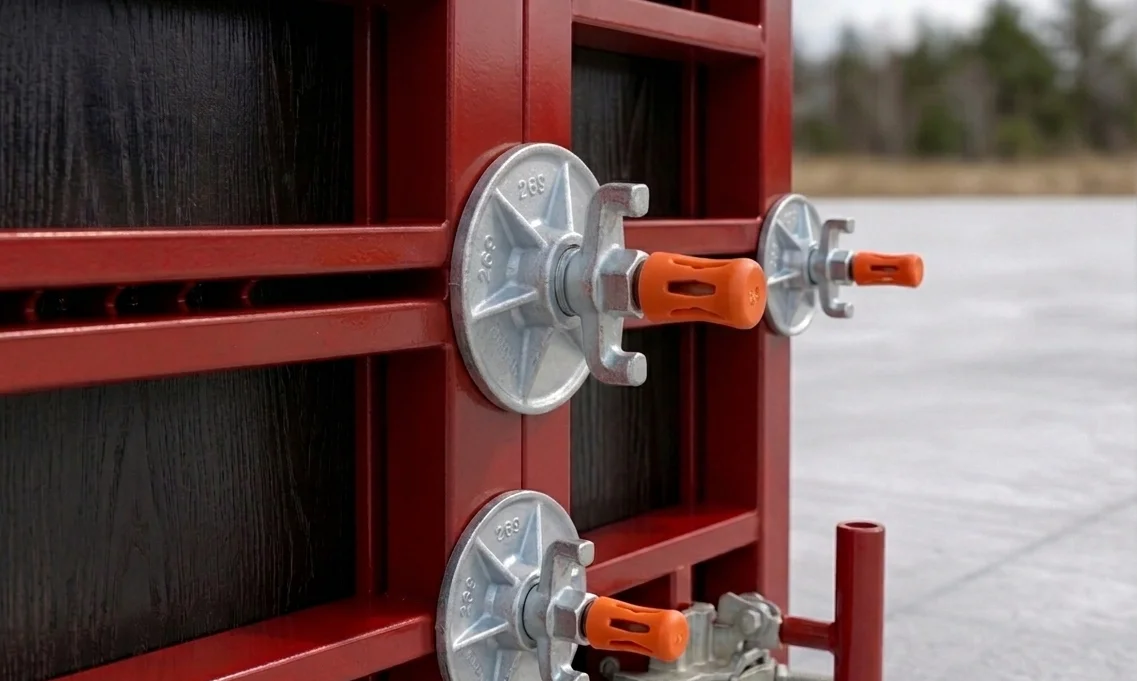
Does a Single Formwork Nut Affect the Entire System?
Why Is Nut Selection Critical in Formwork Systems?
On construction sites, many issues do not originate from “large components,” but rather from small yet critical connection elements. In formwork systems, one of the most crucial of these components is the tie rod nut.
At first glance, it may seem like a simple part. However, the formwork nut is actually a key element that directly influences load balance within the system. If it is not selected correctly or lacks sufficient quality, the behavior of the entire system can change.
How Does a Formwork Nut Function Within the System?
During concrete pouring, the pressure generated is transferred to the formwork panels and then to the tie rod system. The final point where this load is resisted is the nut.
In other words, the nut is not just a fastening element;
it is the component that carries and balances the load.
Therefore:
- No matter how high-quality the tie rod is
- No matter how strong the panel system is
If the nut is weak, the entire system becomes weak.
The Most Critical Point on Site: Thread Structure and Load Transfer
One of the most overlooked aspects of formwork nuts is the thread structure.
In low-quality or improperly machined threads:
- Load is not distributed evenly
- Stress concentrates at specific points
- The risk of thread stripping increases
This typically manifests as:
- The nut tightens but does not hold
- It loosens after a short time
- It suddenly releases under load
This is one of the most dangerous scenarios in formwork systems.
Why Is Size Selection So Important?
In formwork nuts, size is not only about diameter or form—it also determines the load distribution surface.
The most common sizes in the market:
- 70 mm nut → Light-duty applications
- 90 mm nut → Standard and balanced use
- 100 mm and above → High-pressure systems
A common mistake is choosing smaller sizes to reduce cost.
The result:
- Load is concentrated on a smaller surface
- Pressure on the panel surface increases
- Local deformation occurs
Over time, this leads to gaps and alignment issues in the system.
The Real Advantage of Wing (Articulated) Nuts
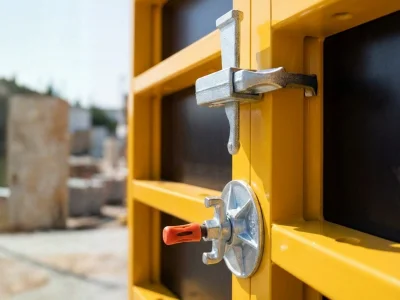
On-site conditions are not always perfectly aligned. This is where wing (base plate) nuts come into play.
Compared to standard nuts:
- They provide better surface contact
- They maintain balance on angled surfaces
- They distribute the load over a wider area instead of a single point
This small difference offers significant advantages, especially in high-pressure concrete pours.
Material Quality: The Invisible but Decisive Factor
One of the most critical factors determining the performance of formwork nuts is material quality.
In low-quality materials, you often see:
- Low yield strength → early deformation
- Low tensile strength → risk of fracture
- Irregular structure → unpredictable behavior
On-site, this is usually observed as:
- Faster-than-normal wear
- Rapid thread damage
- Inconsistent performance with the same product
This means uncontrolled risk.
Most Common Mistakes on Site
Common issues in practice are usually caused by:
- Using products of different quality together
- Reusing old and worn nuts
- Incompatible thread structures with tie rods
- Incorrect size selection
- Use of uncertified products
These mistakes may not be immediately visible, but they will inevitably appear under load.
Quality Verification and the GCE Metal Approach
In professional projects, evaluating formwork nuts based solely on appearance is not sufficient. These are critical components that operate under high loads and directly affect system safety.
The correct approach is to verify product performance during production and deliver it to the site with confidence. This includes:
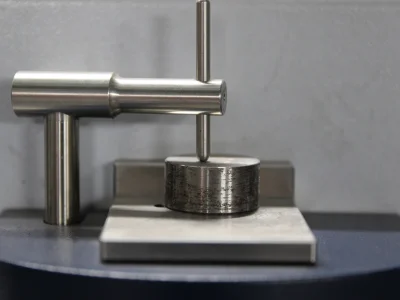
- Mechanical strength verification (yield & tensile tests)
- Material analysis
- Thread tolerance and dimensional checks
- EN 10204 3.1 certified production
- Lot-based traceability
These processes make product performance predictable on-site.
At GCE Metal, we do not just supply products—we provide controlled and documented quality in scaffolding and formwork accessories.
Accordingly:
- We share test reports and quality documents with every shipment
- We ensure traceability through lot-based tracking
- We create quality dossiers for each product
- We organize independent and accredited testing upon request
At the same time, we adopt a strength-focused production approach, especially for wing nuts and tie rod nuts. We do not just manufacture our products—we validate them through testing and certify them with documentation.
For more detailed information about GCE Metal wing nuts and tie rod nuts, you can visit our website.
For us, it is not only important to sell the product, but also to ensure and control how it performs on-site. That is why we offer not just products, but verified and traceable quality in formwork and scaffolding systems.
As GCE Metal, our goal is to provide durable, reliable, and performance-controlled connection solutions that can be safely used on-site.
For more information about scaffolding and formwork accessories, please visit our website.
Hi :)
May i help you?
12:20