Cast Iron Applications: Properties and Its Role in Industry
Cast iron is a durable, economical, and easily shapeable material that has been widely used in the metal industry for many years. It is particularly preferred in applications requiring high compressive strength and wear resistance. Thanks to its high carbon content, cast iron is highly suitable for casting processes and allows the production of parts with complex geometries. For this reason, it is used in a wide range of industries, from automotive to construction.
Many connection parts and accessories used in the construction industry are also produced using casting technologies. To learn more about such products, you can visit the official website of GCE Metal.
What is Cast Iron?
Cast iron is the general term used for iron alloys that typically contain 2–4% carbon. This high carbon content improves the material’s castability while also providing important characteristics such as vibration damping and compressive strength.
The main types of cast iron include:
- Grey cast iron (GG25 / EN-GJL)
- Ductile cast iron (GGG40 / EN-GJS)
- White cast iron
- Malleable cast iron
Each type has different mechanical properties, making them suitable for different industrial applications.
Key Properties of Cast Iron
The widespread use of cast iron in industry is mainly due to its important technical properties.
The main properties include:
- High compressive strength
- Excellent castability
- Vibration damping capability
- Wear resistance
- Cost-effective production of complex parts
These properties make cast iron a commonly preferred material in industries such as machinery manufacturing, automotive, and construction.
Common Applications of Cast Iron
Construction and Formwork Systems
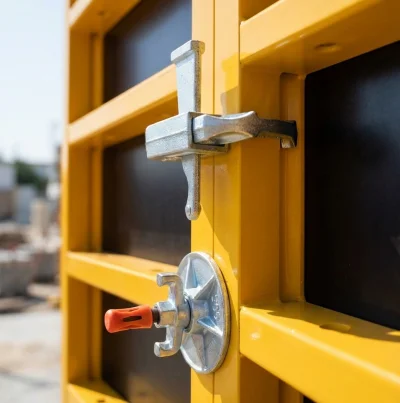
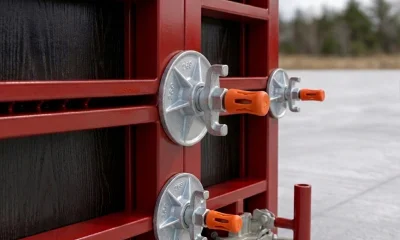
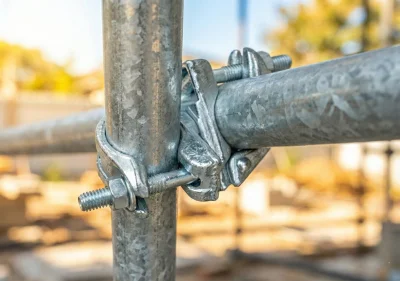
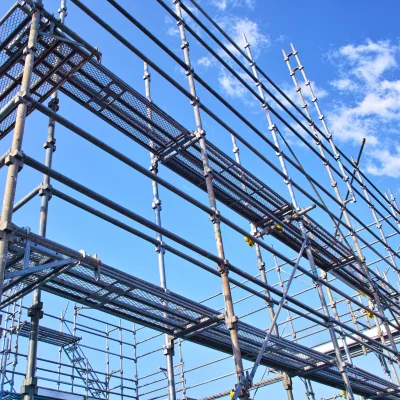
In the construction industry, cast iron is widely used in connection components for formwork and scaffolding systems. These parts operate under high loads and pressure during concrete pouring.
Examples of applications include:
- Tie rod nuts
- Formwork nuts
- Flanged nuts
- Scaffolding connection components
These components play a critical role in forming the structure of concrete formwork systems and ensuring that concrete is poured accurately and safely.
Machinery and Industrial Equipment
Cast iron is widely used in machine manufacturing due to its vibration damping capability. This property increases machine stability and extends the lifespan of equipment.
Examples of applications include:
- Machine bodies
- Gear housings
- Pump casings
- Compressor components
Automotive Industry
In the automotive sector, cast iron is used for components that must withstand high temperatures and pressure.
Common applications include:
- Engine blocks
- Brake discs
- Exhaust manifolds
- Differential housings
Infrastructure and Urban Applications
Cast iron is also widely used in infrastructure projects. Its durability and high load-bearing capacity make it a reliable material for urban infrastructure.
Examples include:
- Manhole covers
- Stormwater grates
- Pipeline systems
- Valve bodies
Why is Cast Iron Preferred?
One of the most important reasons for the widespread use of cast iron is its cost-effective production. In addition, its suitability for manufacturing complex components, high compressive strength, and long service life are significant advantages.
These characteristics make cast iron a reliable engineering material across many industries.
Conclusion
Cast iron is a durable material with a wide range of applications in the construction, machinery, automotive, and infrastructure sectors. Its high compressive strength and excellent castability make it suitable for many industrial applications. With the correct material selection and proper manufacturing methods, cast iron components can provide long-lasting and reliable performance.
GCE Metal and Cast Components
Founded in 2016, GCE Metal is a Turkish company specialized in manufacturing accessories for scaffolding and formwork systems in the construction industry.
The company produces tie rods, nuts, formwork accessories, and various scaffolding connection components, serving as a reliable solution partner in both domestic and international markets.
For more detailed information about GCE Metal products, you can visit the official website:
www.gce.com.tr
Hi :)
May i help you?
06:33